
Start with the whole stretch
Look at the whole stretch of river first.
Look from bank to bank and a little upstream and downstream. Notice where fast water slows, where the water gets deeper, and where banks, logs, rocks, or bends change the current.
A lane is a path of current where you can make the same drift more than once. Once you see a clear change in the water, choose one lane to fish.
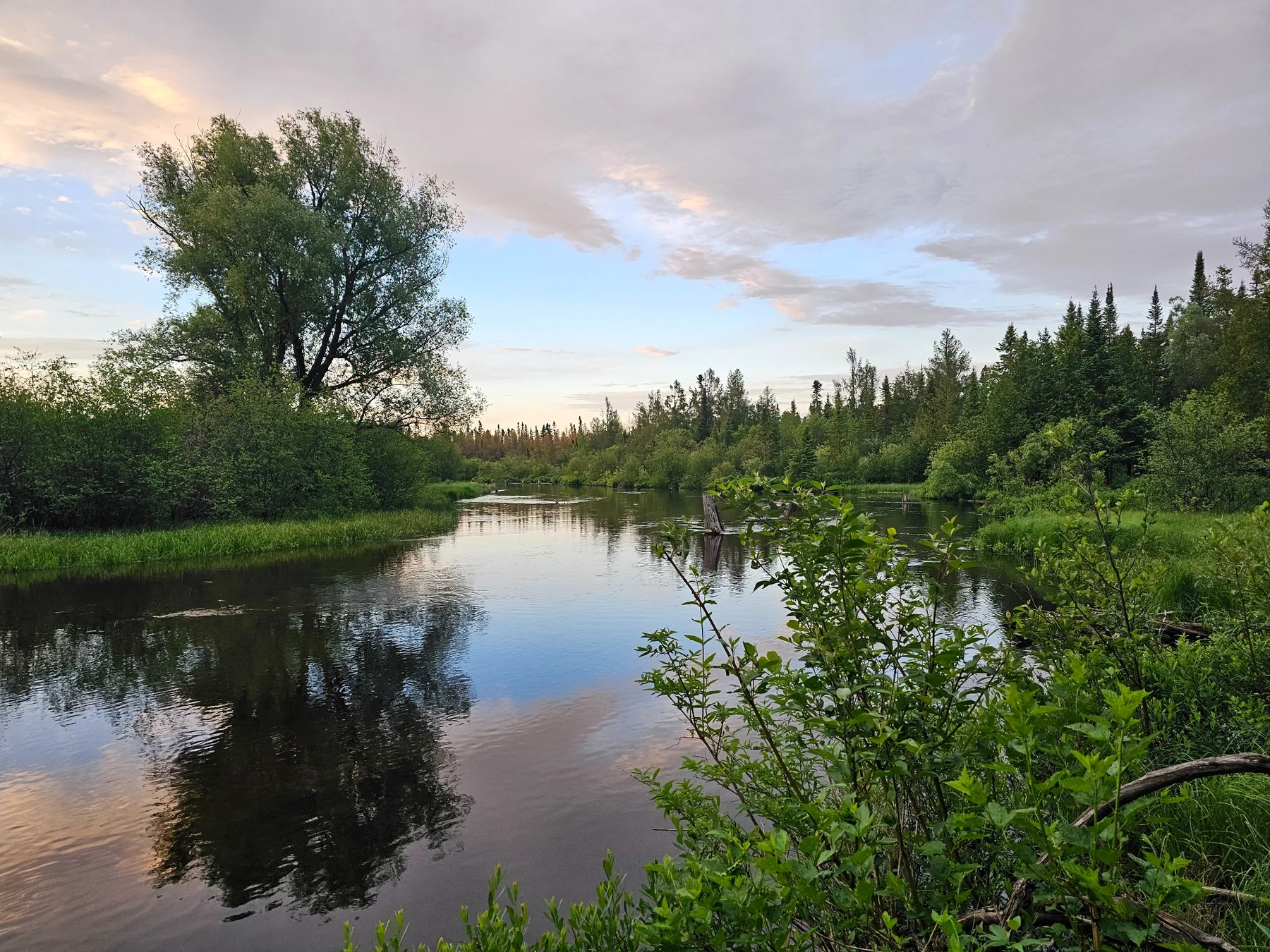
See the big picture before choosing a cast.
Compare faster water with slower margins, bends, cover, and places where one type of water changes into another.
Use the photo for visible surface clues; confirm depth, footing, and access at the river.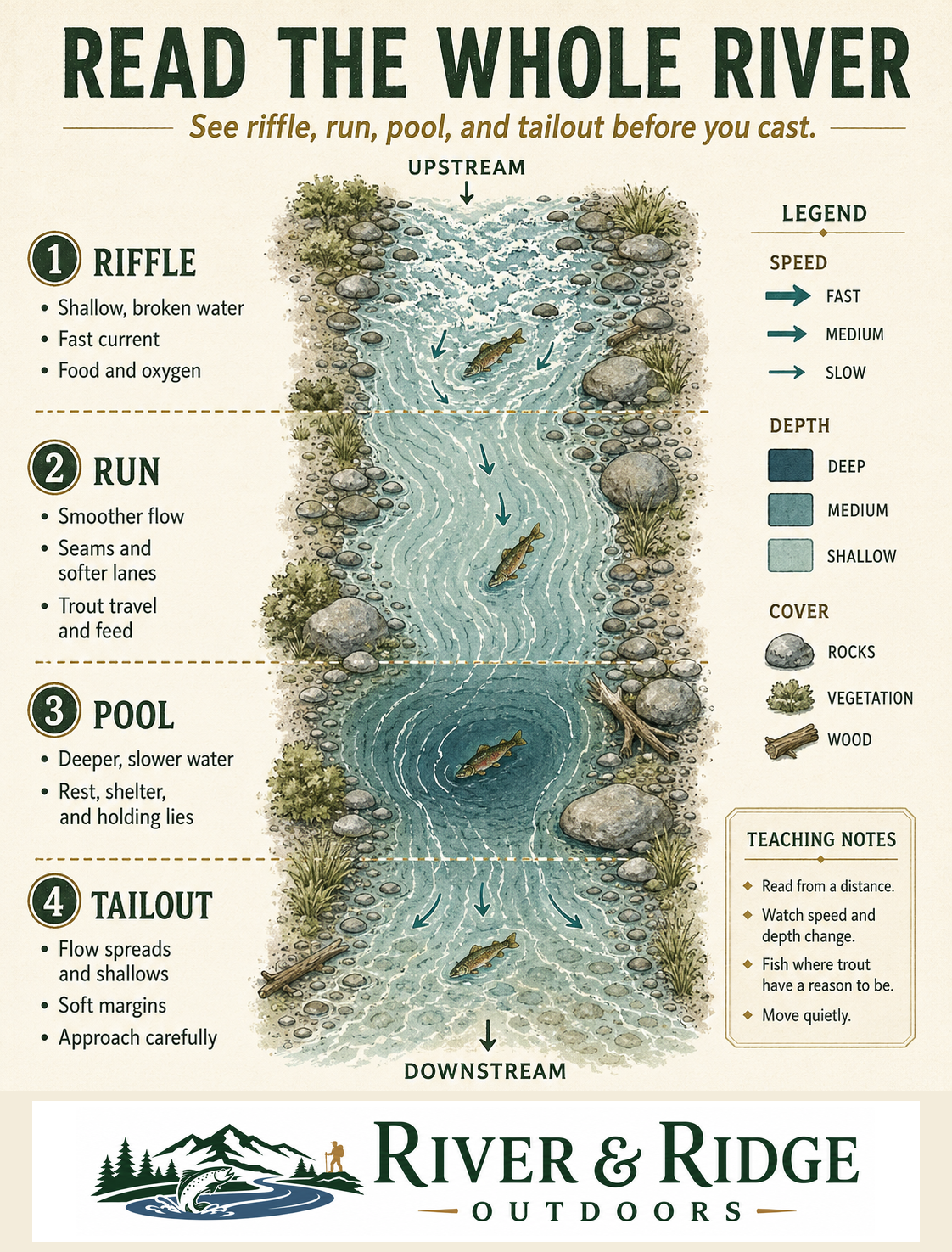
See how the main water types fit together.
The diagram makes the sequence easier to see, then you can look back at the photograph and find the same changes in real water.
The basic sequence
Follow the water as it changes.
Start with the common progression from broken, shallower water into steadier flow, then deeper or slower water, and finally the shallowing exit. Real streams vary, but this sequence gives you a useful map for what to look for next.
Broken, generally shallower water with smaller current tongues and edges.
A longer lane where current and depth become comparatively steady.
Deeper or slower water with a head, body, edges, and an exit transition.
The shallowing exit where the pool gives way to faster water downstream.
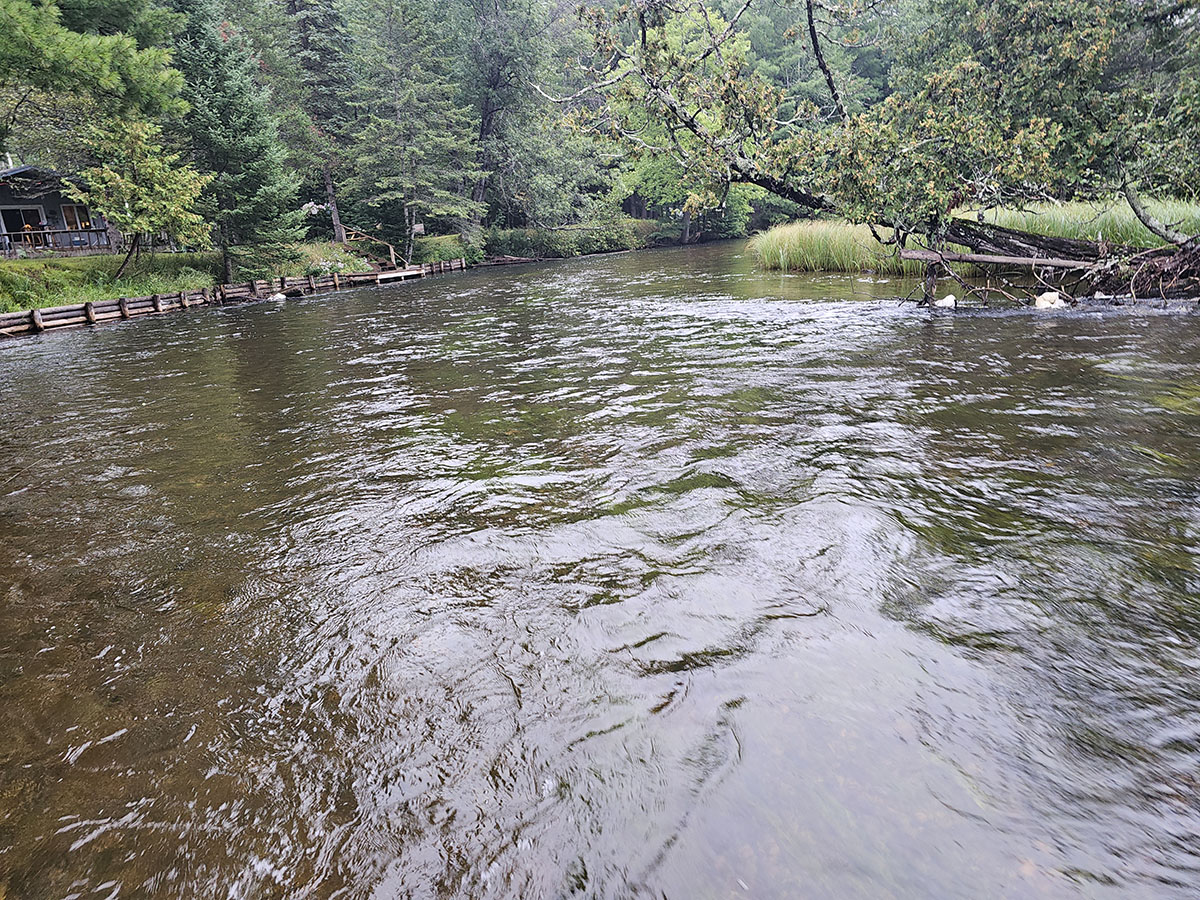
Divide the riffle into lanes.
Persistent broken current reveals smaller tongues, edges, and quieter strips. Pick one lane and make several controlled drifts.
Confirm current strength and footing at the river.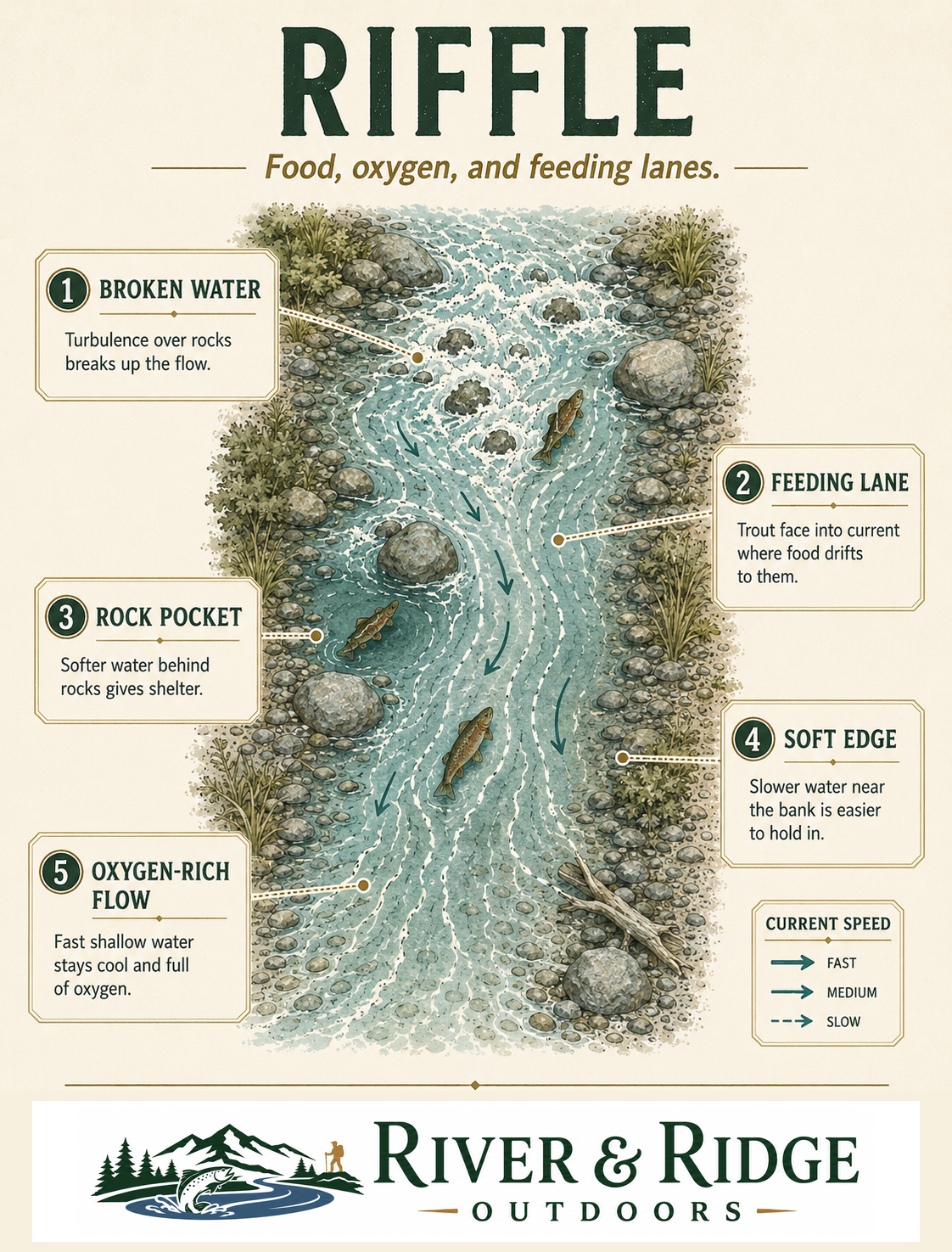
See the smaller lanes inside broken water.
The simplified view makes the current tongues and edges easier to recognize in the field photograph.
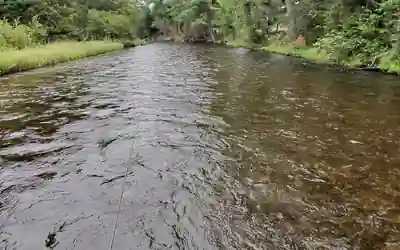
Follow a steady lane.
A run gives you a longer path of comparatively consistent current. Work one lane methodically and use the result to guide the next adjustment.
Use the surface clues to choose a starting lane; confirm depth and current strength on site.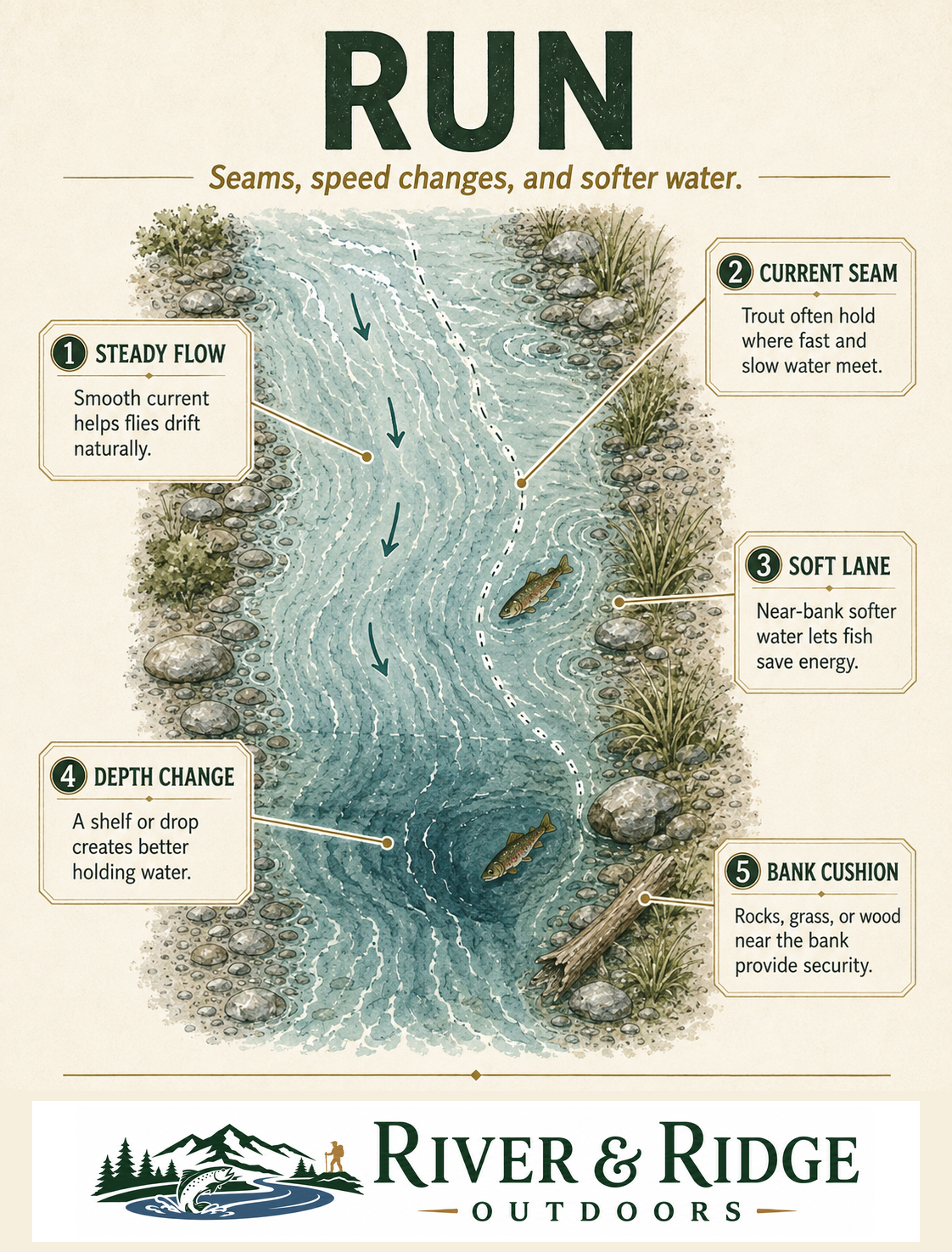
See continuity through the run.
The diagram highlights how a run carries a fishable lane downstream between more obvious changes in water type.
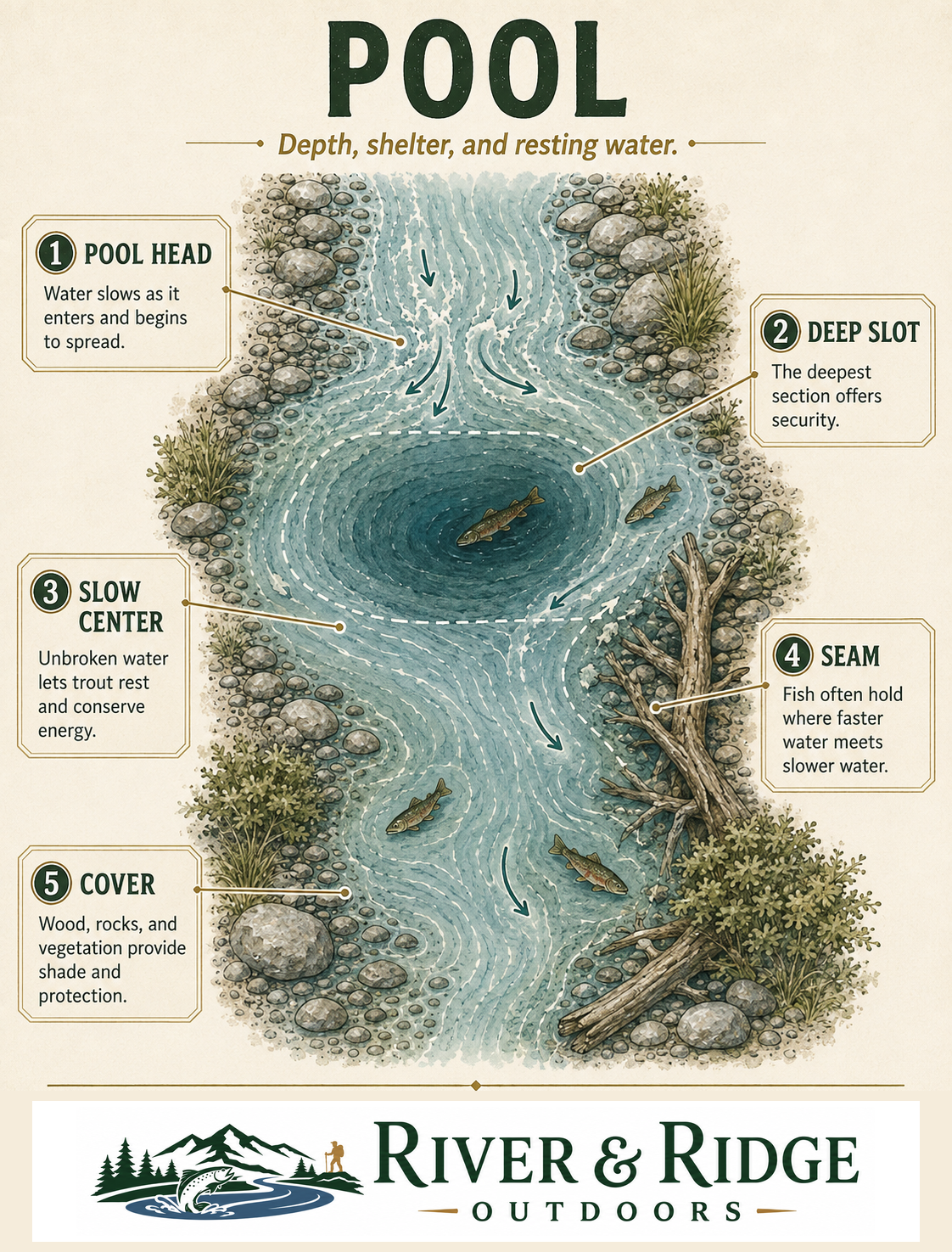
Read a pool from head to tail.
Use the head, feeding edges, deeper body, and transition toward the exit to break the pool into manageable lanes.
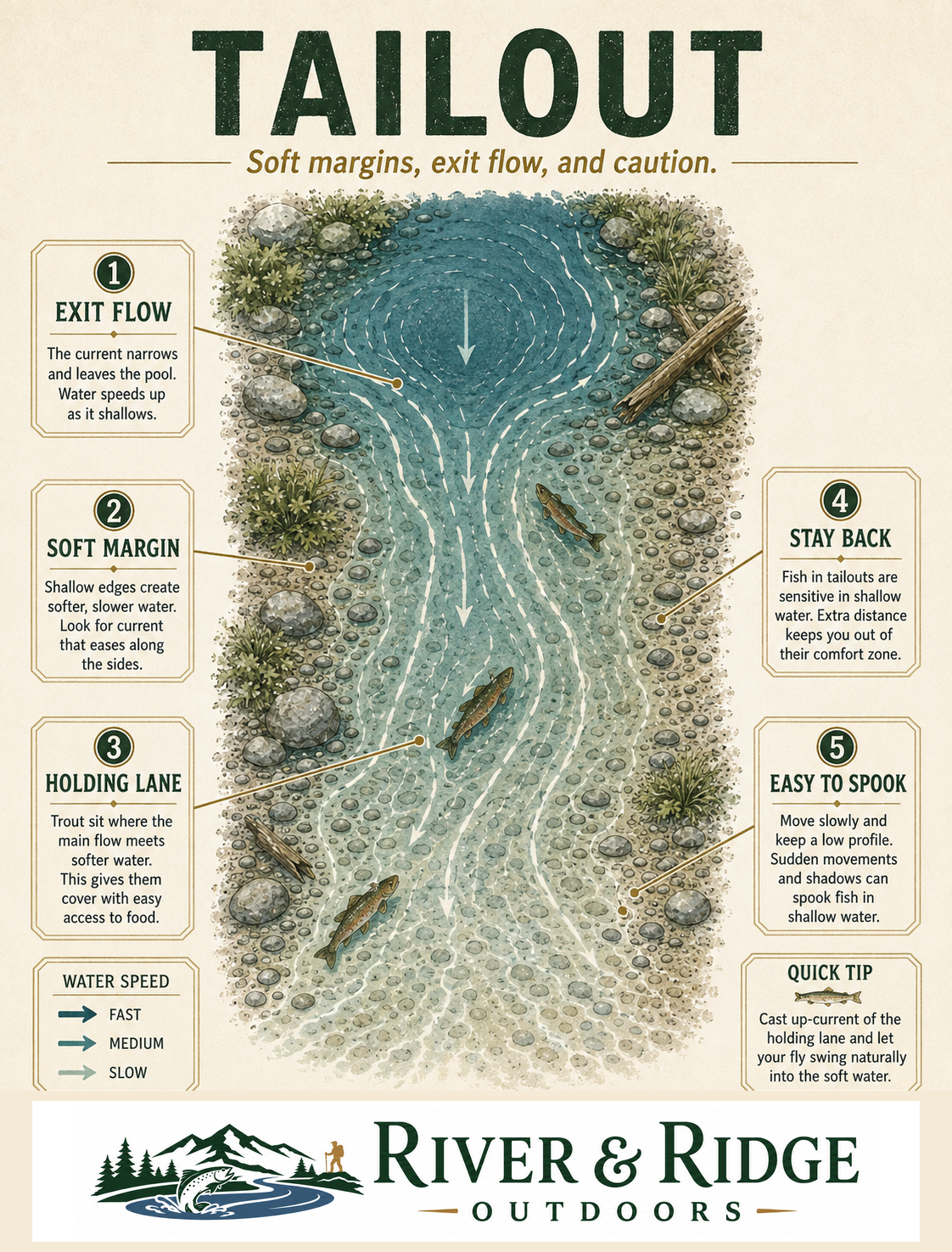
Watch the water shallow and speed up.
Trace the pool or run toward its shallowing exit. Approach carefully and choose a lane before the water becomes more exposed.
Inside each water type
Find the speed change, then choose a lane.
Riffles, runs, pools, and tailouts describe the larger piece of water. Seams, banks, and structure create smaller current changes inside them.
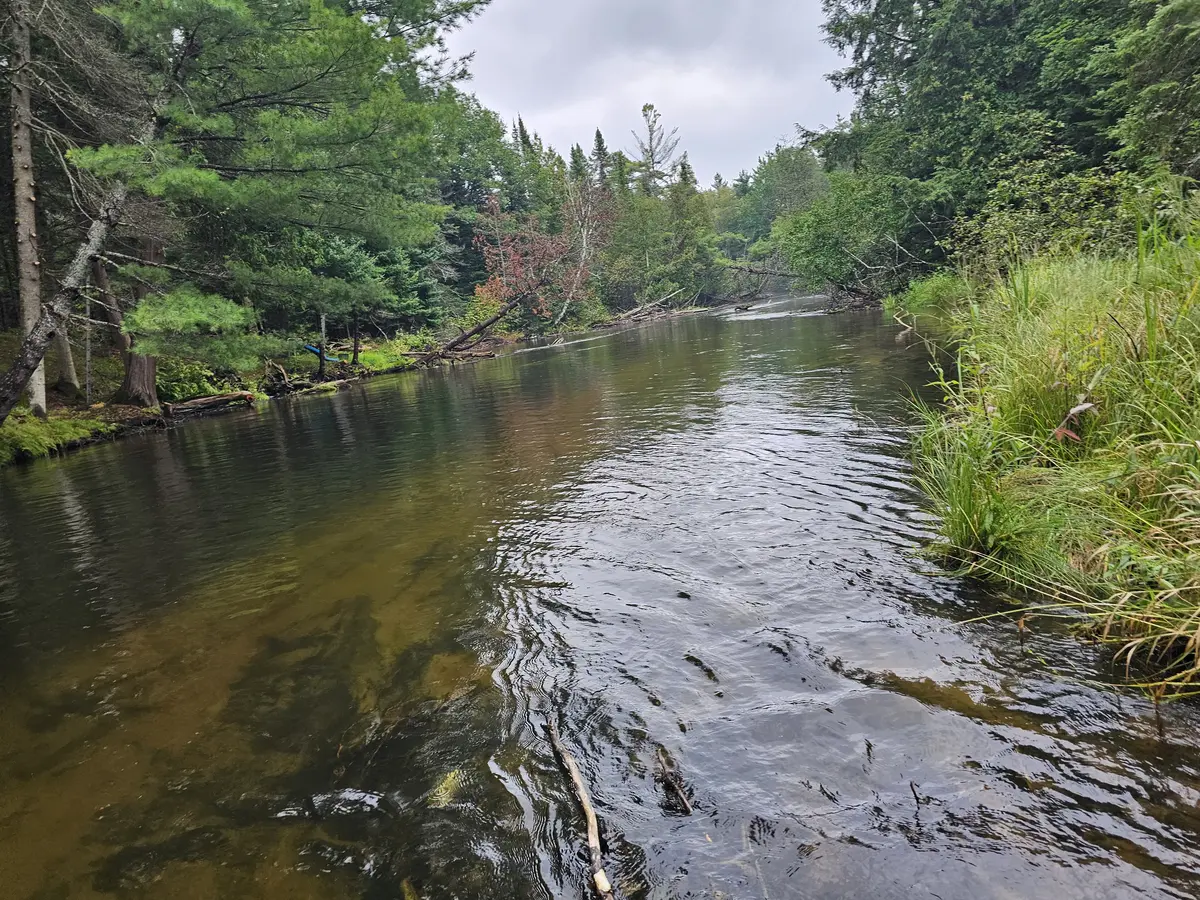
Find the speed change.
A seam forms where currents of different speeds meet. Use that visible boundary to choose a repeatable drift lane.
Use the surface clue to choose a starting lane; confirm depth and footing on site.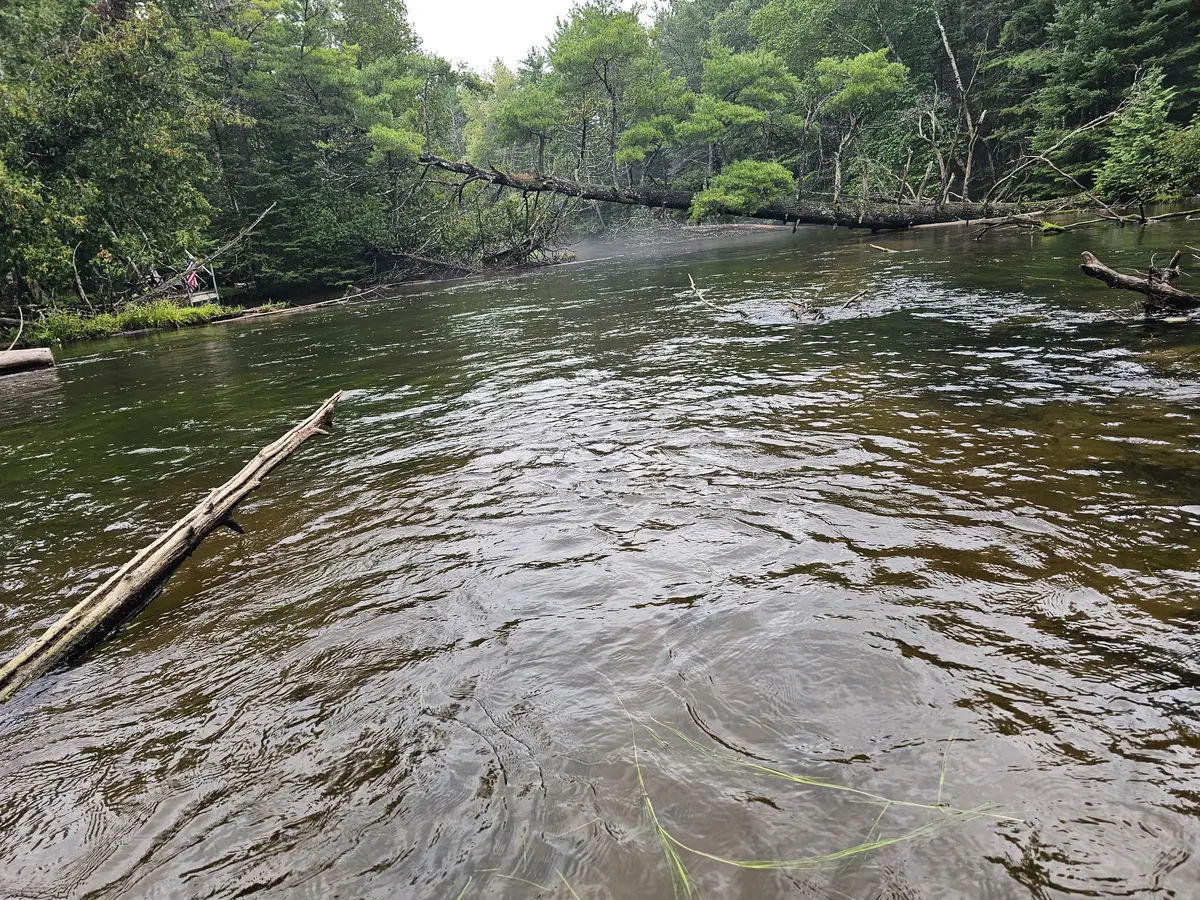
Let structure divide the current.
Wood and other current breaks create smaller quieter pockets beside stronger flow. Treat each pocket as its own short lane.
Choose the closest clear lane first, then work outward.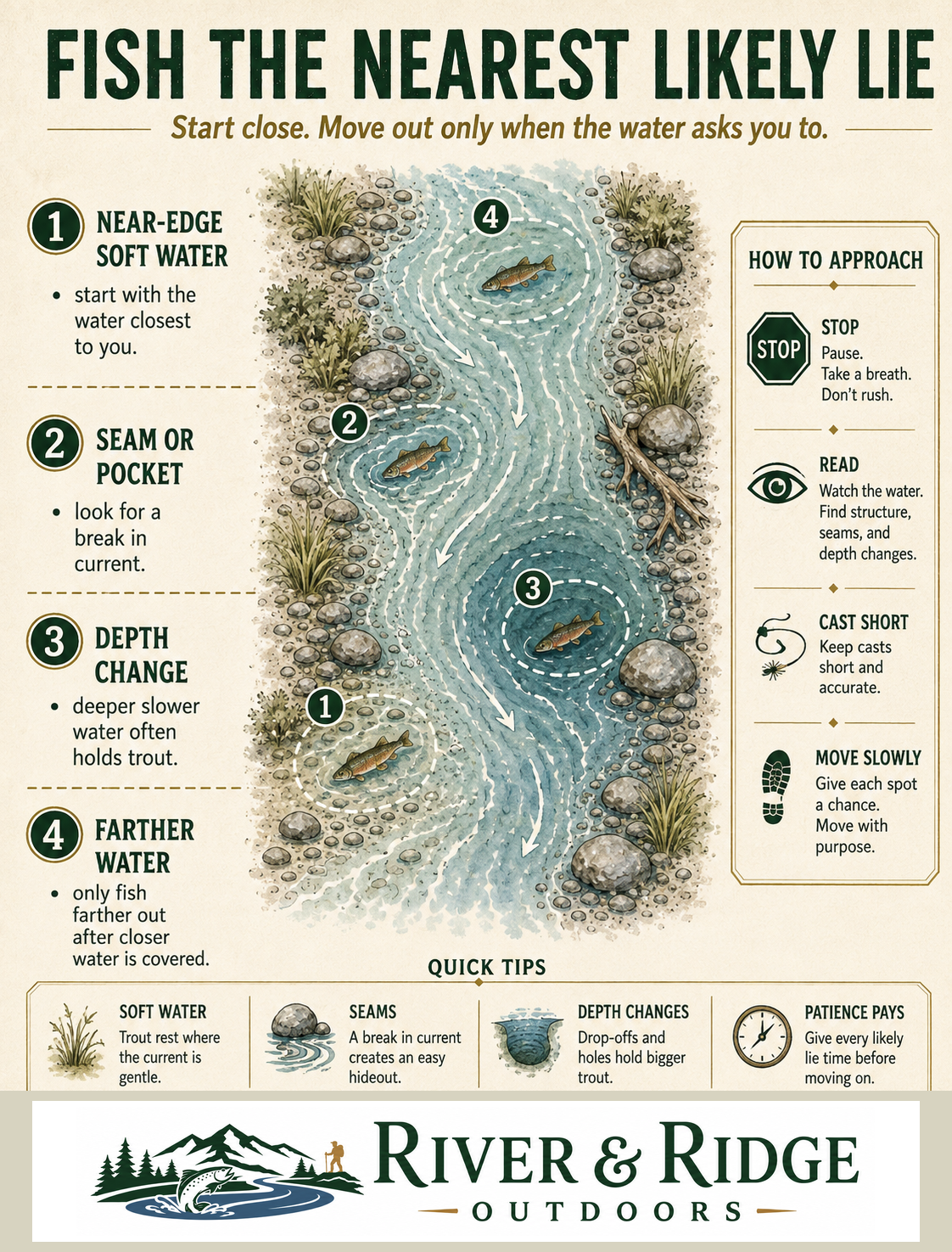
Start with the nearest likely lane.
Select one visible lane, present deliberately, and let the result guide the next decision.
Three-part reading method
Water type → Lane → Presentation
- Name the water type.Use the clearest label the water supports: riffle, run, pool/deeper water, tailout, bank edge, structure, or unsure.
- Find the current, depth, or cover change.Look for a seam, edge, current break, or quieter pocket inside that water.
- Choose one repeatable lane.Make the starting presentation to that lane, then use the result to decide what to change next.
Build your eye on the river
Practice one water type at a time.
Use the photograph and diagram together, then find the same type of water on the river in front of you.
Give Feedback