Beginner visual guide
See how the essential terms connect.
Use these diagrams as a quick reference, then search the definitions below for more detail.
Plain-language reference
Search the terms used throughout the system.
Fly rod
The long, flexible rod that carries the guides and helps cast the weighted fly line.
Fly reel
The spool attached to the rod that stores backing and fly line and helps control a running fish.
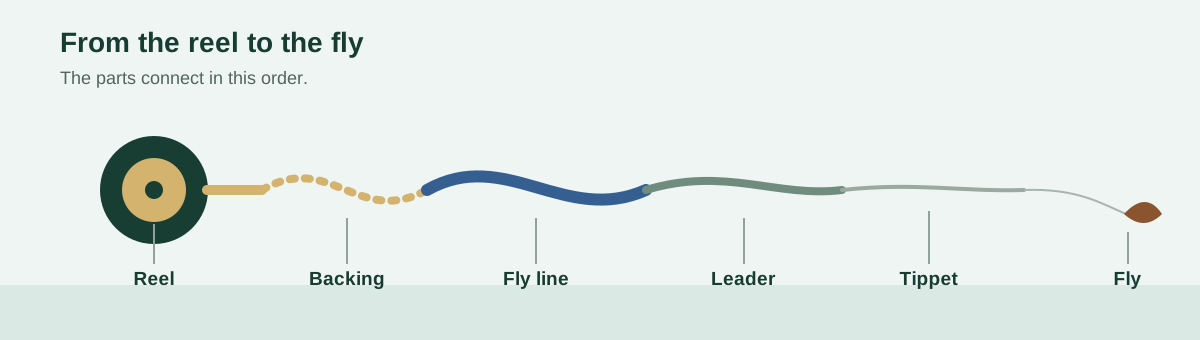
Backing
Thin line stored beneath the fly line on the reel. It provides extra line when a fish runs farther than the fly line.
Fly line
The thicker, weighted line that loads the rod and carries the leader and fly during the cast.
Leader
The tapered clear connection between the fly line and the final tippet or fly.
Tippet
The thin final section between the leader and fly. It can be replaced as flies are changed or the leader shortens.
Fly
An artificial imitation tied to a hook and used to represent insects, baitfish, eggs, or other trout food.
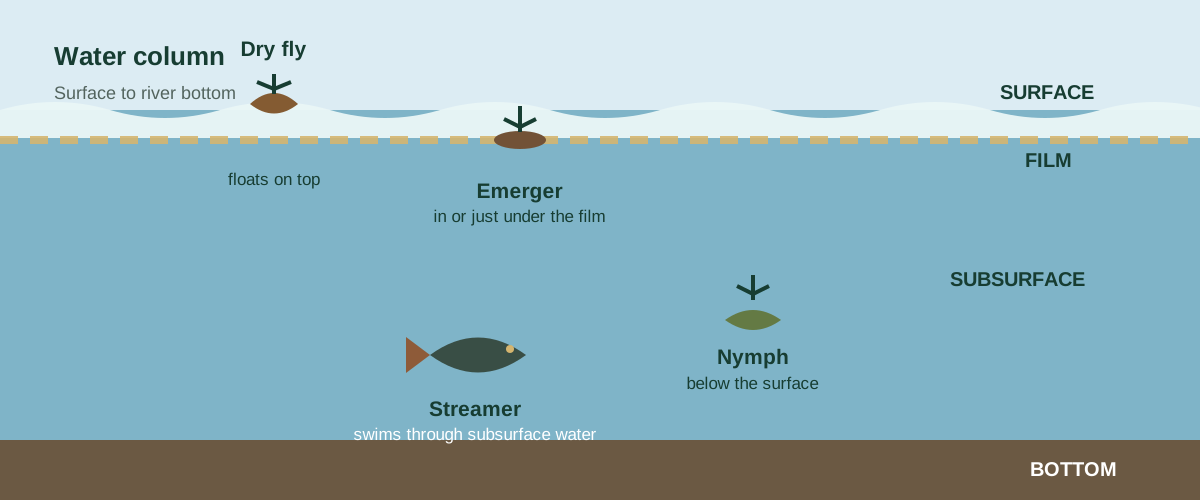
Dry fly
A fly designed to float on the water surface.
Emerger
An imitation of an aquatic insect moving from an underwater stage toward the surface and adulthood.
Nymph
An imitation of an immature aquatic insect that fishes below the surface.
Streamer
A larger moving fly that commonly imitates a baitfish, leech, or other active food source.
Indicator
A visible floating aid that helps suspend a subsurface rig and show pauses or movement that may signal a take.
Split shot
A small removable weight placed on the leader or tippet when the matching rig calls for more depth control.
Practice fly
Yarn or another hookless substitute used to practice casting safely away from the river.
Water column
The water from the surface down to the river bottom.
Feeding lane
A path where current repeatedly carries food within reach of a trout.
Hatch
A period when many aquatic insects are changing stage and becoming available to trout.
Rise
A visible surface disturbance created when a trout takes or inspects food near the top of the water.
Take
The moment a trout eats or grabs the fly.
Hook set
The controlled movement used to remove slack and place the hook after a take.
Mend
A repositioning of fly line on the water to reduce unwanted drag or improve the presentation.
Wading
Standing or moving in the river. Depth, current, bottom, and access must be judged before entering.
Broken surface
A surface visibly disrupted by current, riffles, waves, or wind.
Smooth surface
A surface with limited disturbance where drag and approach are often more visible.
Clear
Water with relatively high visibility.
Stained
Water with reduced visibility from suspended material or color.
Low level
River level below the normal working reference for the section.
Normal level
River level within the expected working range for the section.
High level
River level above the normal working reference; safety and access require reassessment.
Slow current
Current that moves the presentation gradually and exposes drag quickly.
Moderate current
Current with enough speed to transport food while remaining manageable for controlled presentation.
Fast current
Current that increases line influence, depth-control demands, and safety risk.
Cold
The low-temperature category used in the River & Ridge system.
Cool
The middle temperature category used in the River & Ridge system.
Warm
The category that triggers increased fish-stress awareness and potential decision not to fish.
Seam
A boundary where currents of different speeds or directions meet.
Current break
A feature that reduces or redirects current, creating a holding or recovery area.
Edge
A transition in depth, speed, cover, bank structure, or water type.
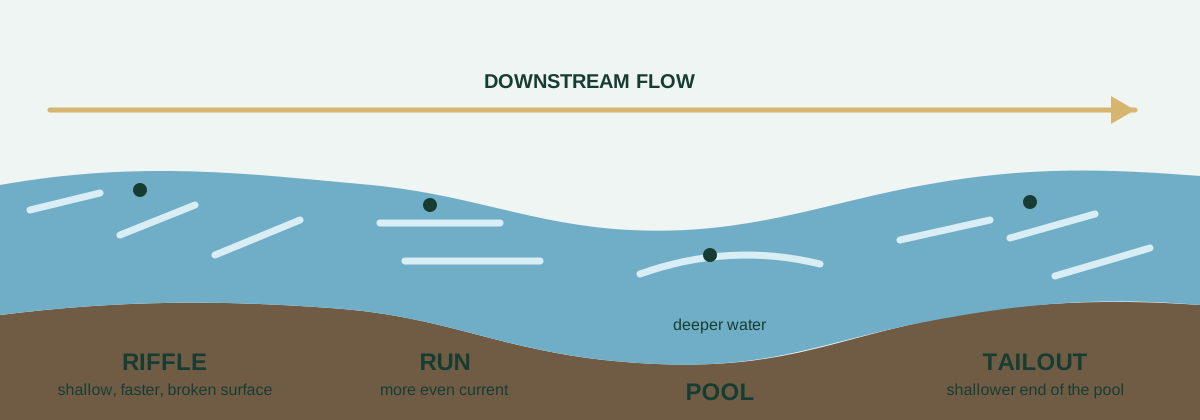
Riffle
Relatively shallow, faster water with a broken surface.
Run
More uniform current, usually deeper and smoother than a riffle.
Pool
A deeper feature commonly described by its head, body, and tail.
A small fishable area among faster current, often created by structure.
Tailout
The shallower downstream end of a pool or run.
Surface
The top of the water where floating food and dry flies travel.
Film
The surface boundary layer where emerging insects and trapped food can concentrate.
Subsurface
Water below the film where nymphs, larvae, pupae, and other food travel.
Presentation
How the fly travels through the water relative to current and fish behavior.
Depth
The vertical position of the fly in the water column.
Weight
Added mass used to help control depth and travel.
Lane
A repeatable path through which the fly and food travel.
Drag
Unnatural fly movement caused by line, leader, current differences, or angler influence.
Redd
A spawning nest disturbed in gravel by a fish.
Thermal refuge
A localized area of cooler water used by fish during warm conditions.
Labeled box position + Size + Pattern
The order used when a card points to a fly: find the labeled box position first, then match the size and pattern.
Why the same words matter
Learn a term once and use it everywhere.
The box, training, and River Intelligence use the same words so a lesson connects directly to what you see and do in the field.
Help refine this page
Did this make the next river decision clearer?
Tell us what helped, what remained confusing, and what a beginner would still need before using this guidance in the field.
Give Feedback