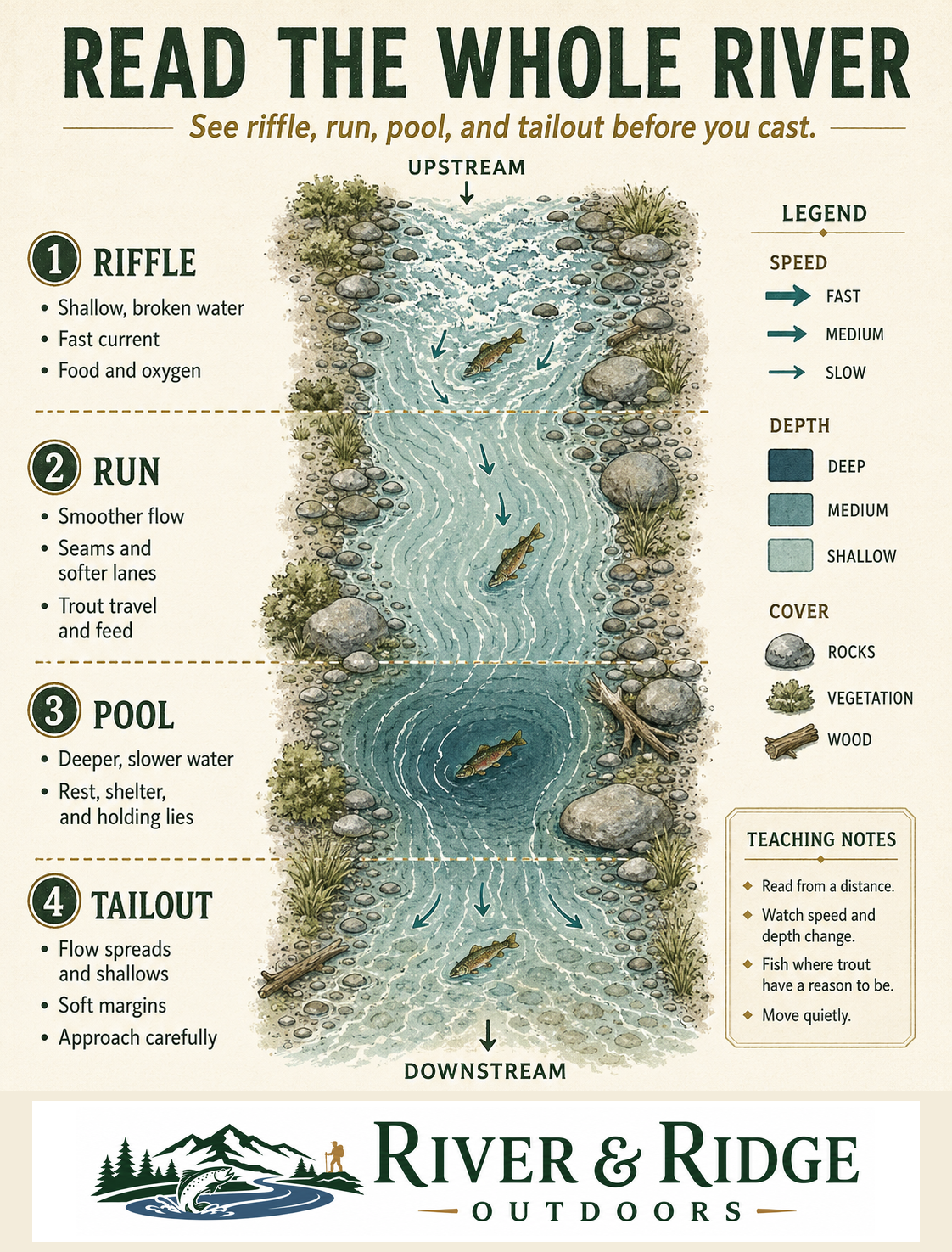
Scan speed and depth
Watch texture, color, bubbles, and the way the current carries debris.
MI-G1 · Michigan regional system
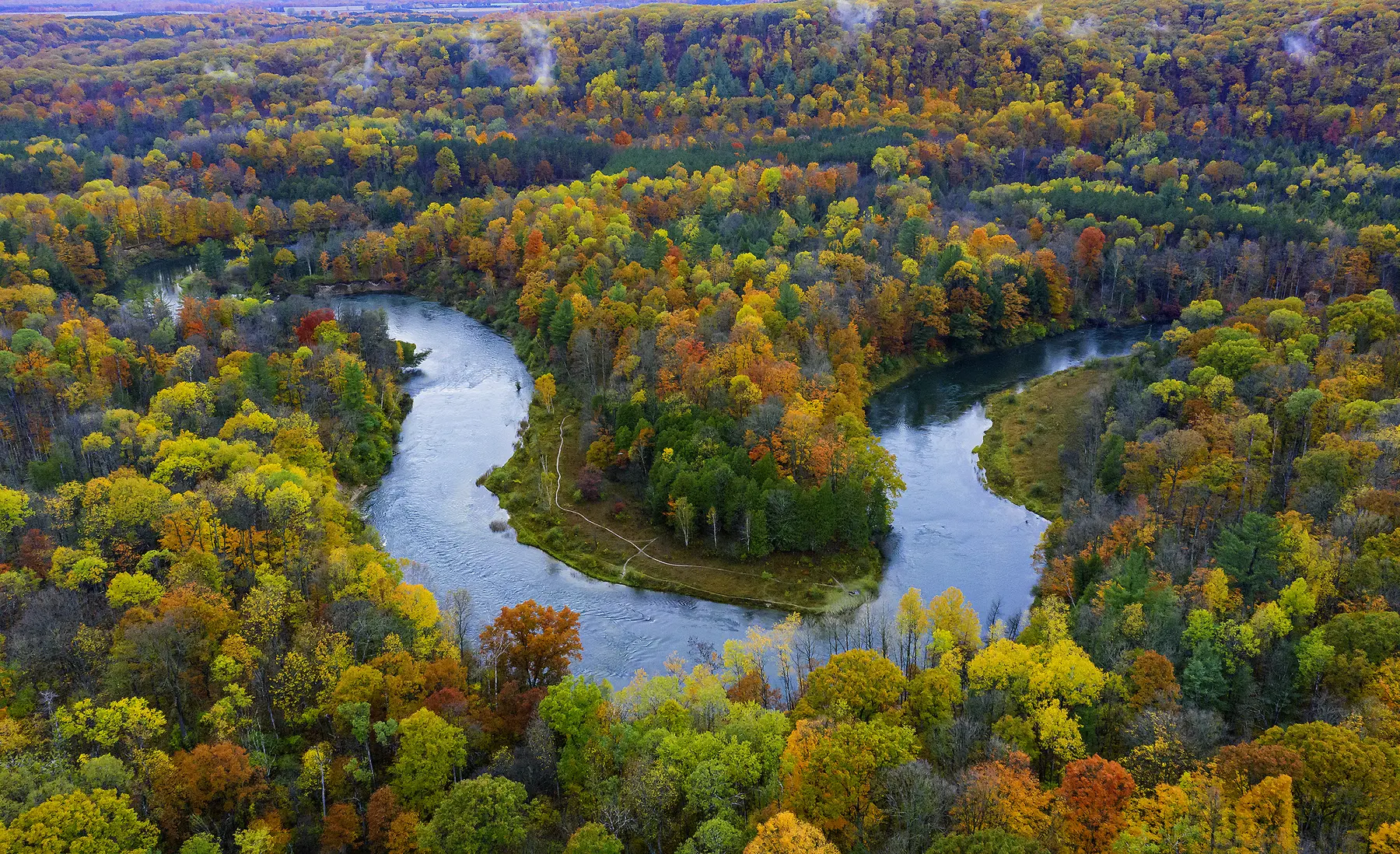
This system covers the cold resident-trout reaches of the Manistee, Pere Marquette, Jordan, Boardman, Betsie, Platte, Pine, upper White, Little Manistee, and similar west-side streams.
Know the reach you plan to fish, check the day’s weather, flow, and water temperature, and save what you will need beyond cell service.
Open preparation guide →First-decision path
Watch where trout are feeding and choose Surface, Film, or Subsurface. Adjust Presentation → Depth → Weight → Change Fly. When changing the fly, refine Size → Shape → Color.
Choose Surface when trout are clearly taking insects from the top of the water. Match the size you see before changing shape or color.
Choose Film when trout are feeding in or just under the surface. Look for bulges, backs, and splashy rises.
Choose Subsurface when the surface is quiet. Improve presentation, then depth and weight, before changing the fly.
Regional signature: Borchers profiles, Brown Drake, Hex, Isonychia, black and tan caddis, practical nymph depth, and three streamer/search roles.
Read the river
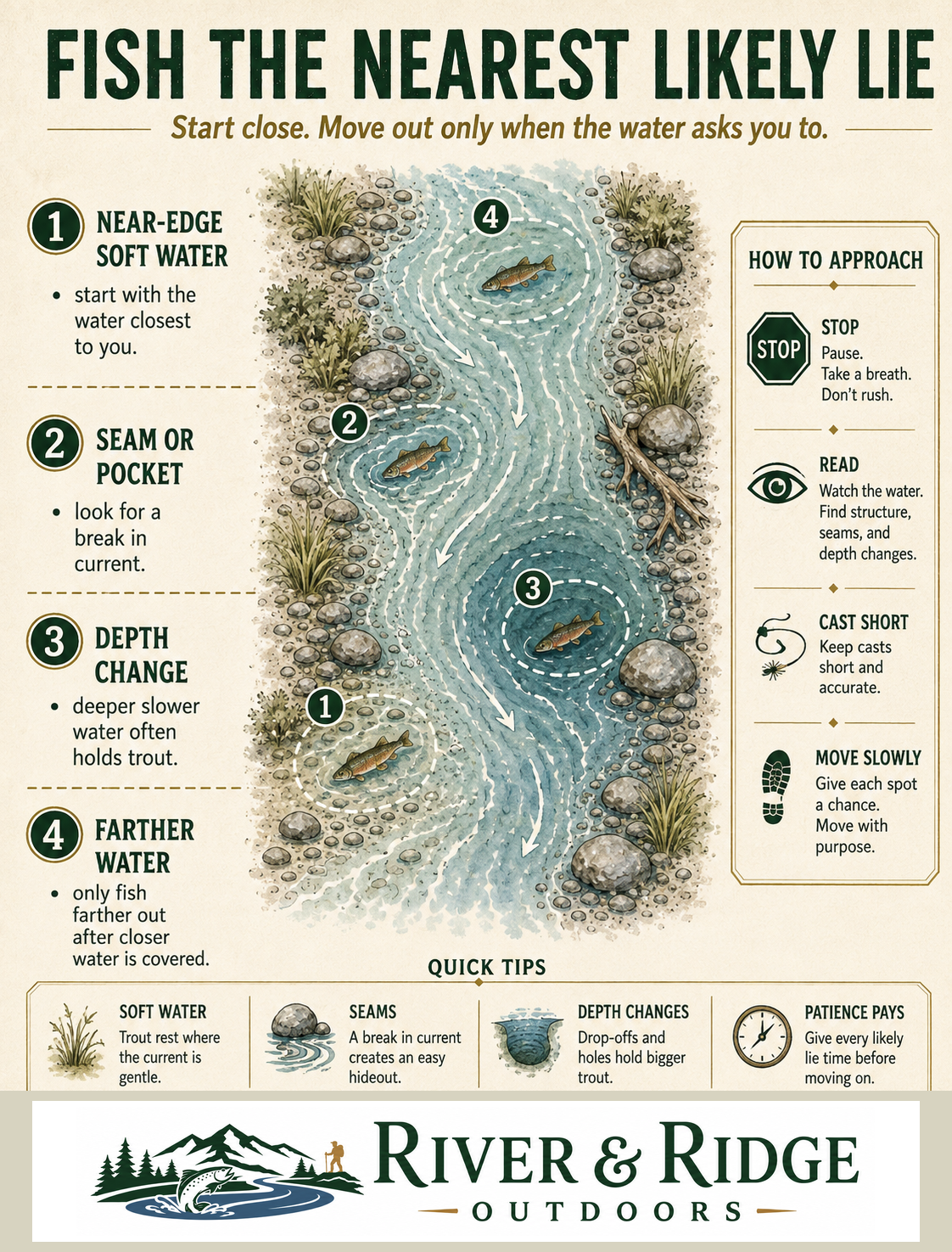
Real field photography shows the water as it actually appears. The illustrated guides make speed, depth, seams, cover, and approach easier to name.
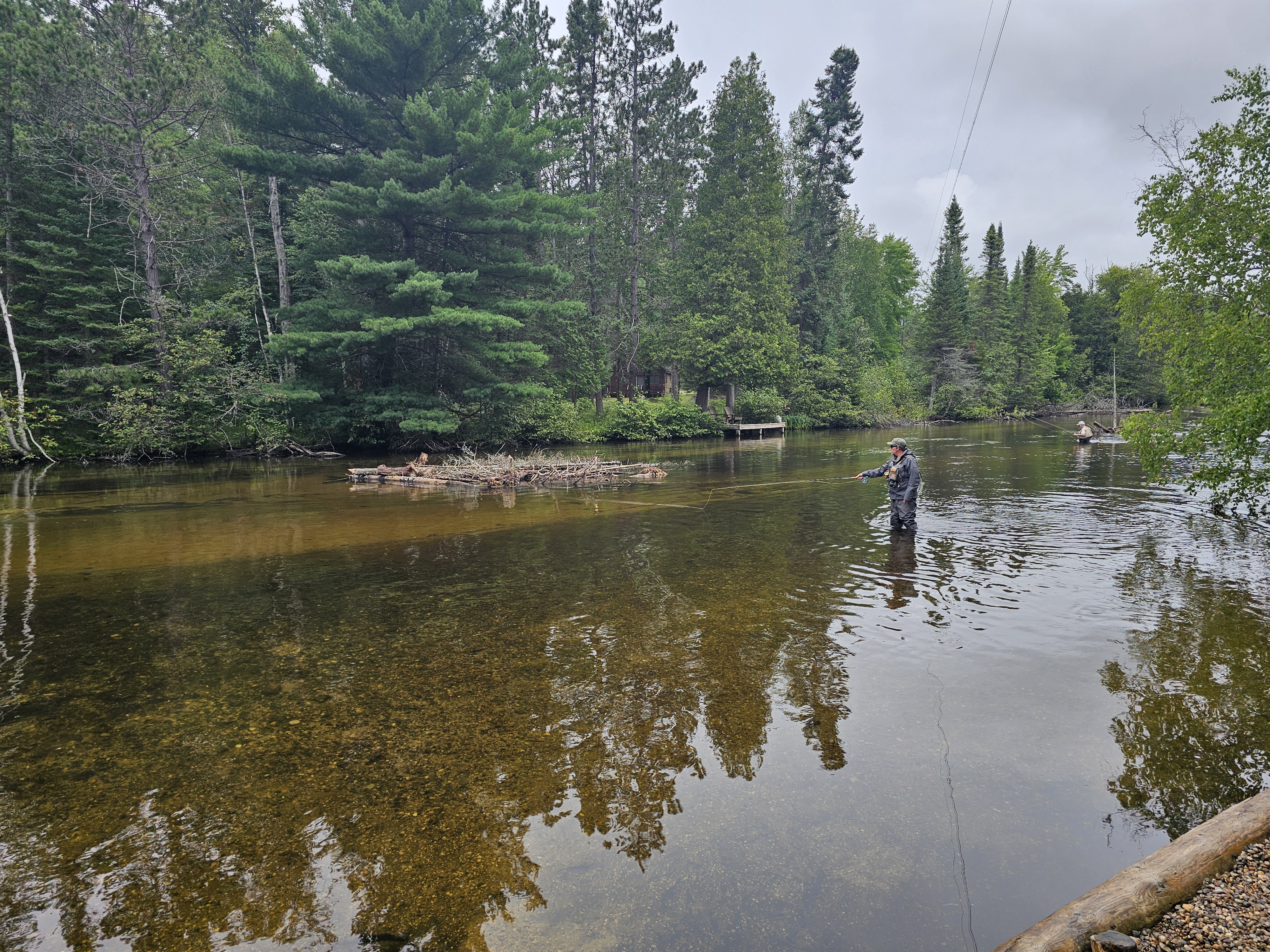
Watch texture, color, bubbles, and the way the current carries debris.
Look for seams, pockets, shade, wood, drop-offs, and softer water beside faster flow.
Use the photo to locate the near soft edge, the darker central travel lane, and the wood-supported holding water. The structure lesson transfers; the selected-river map supplies the regional specifics.
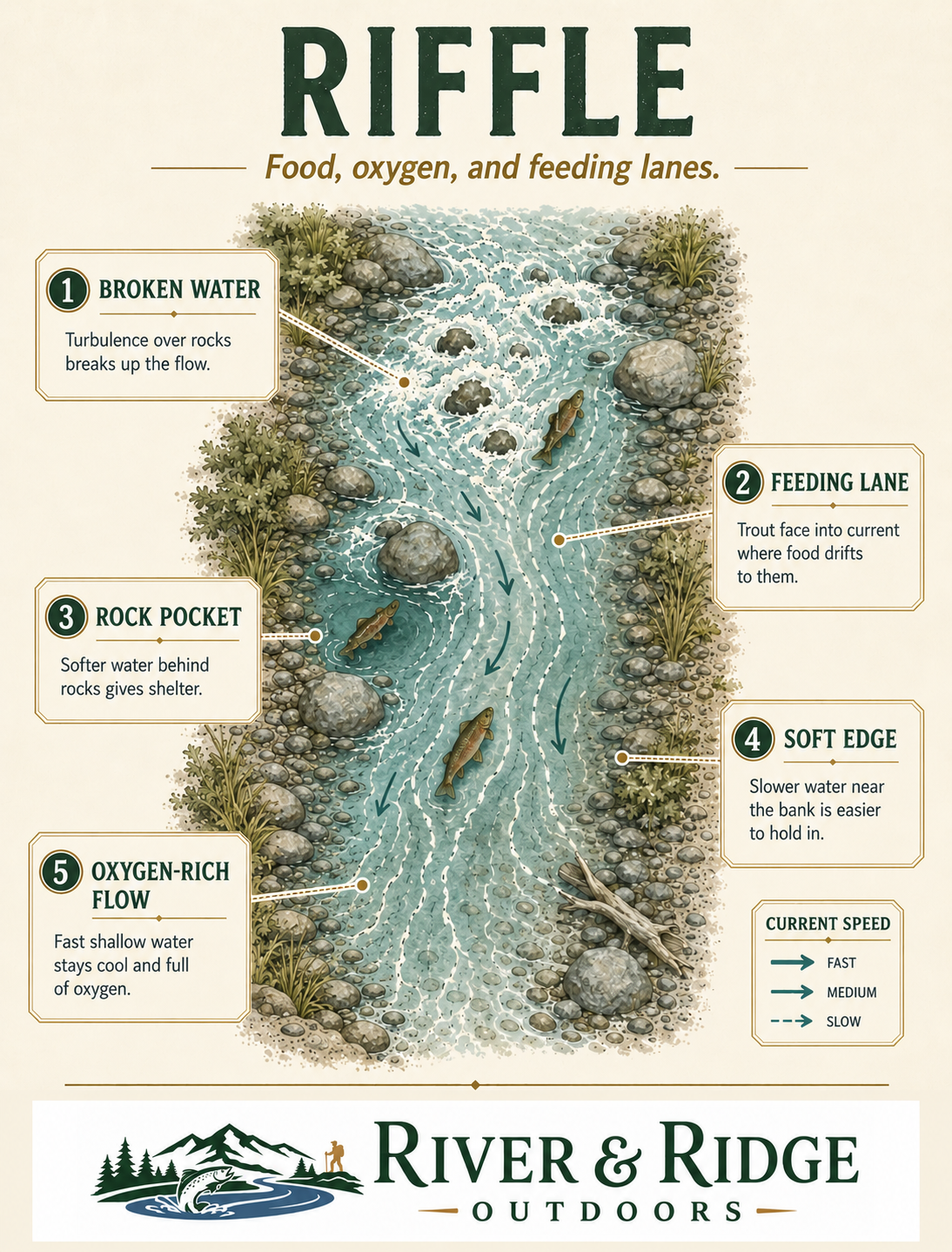
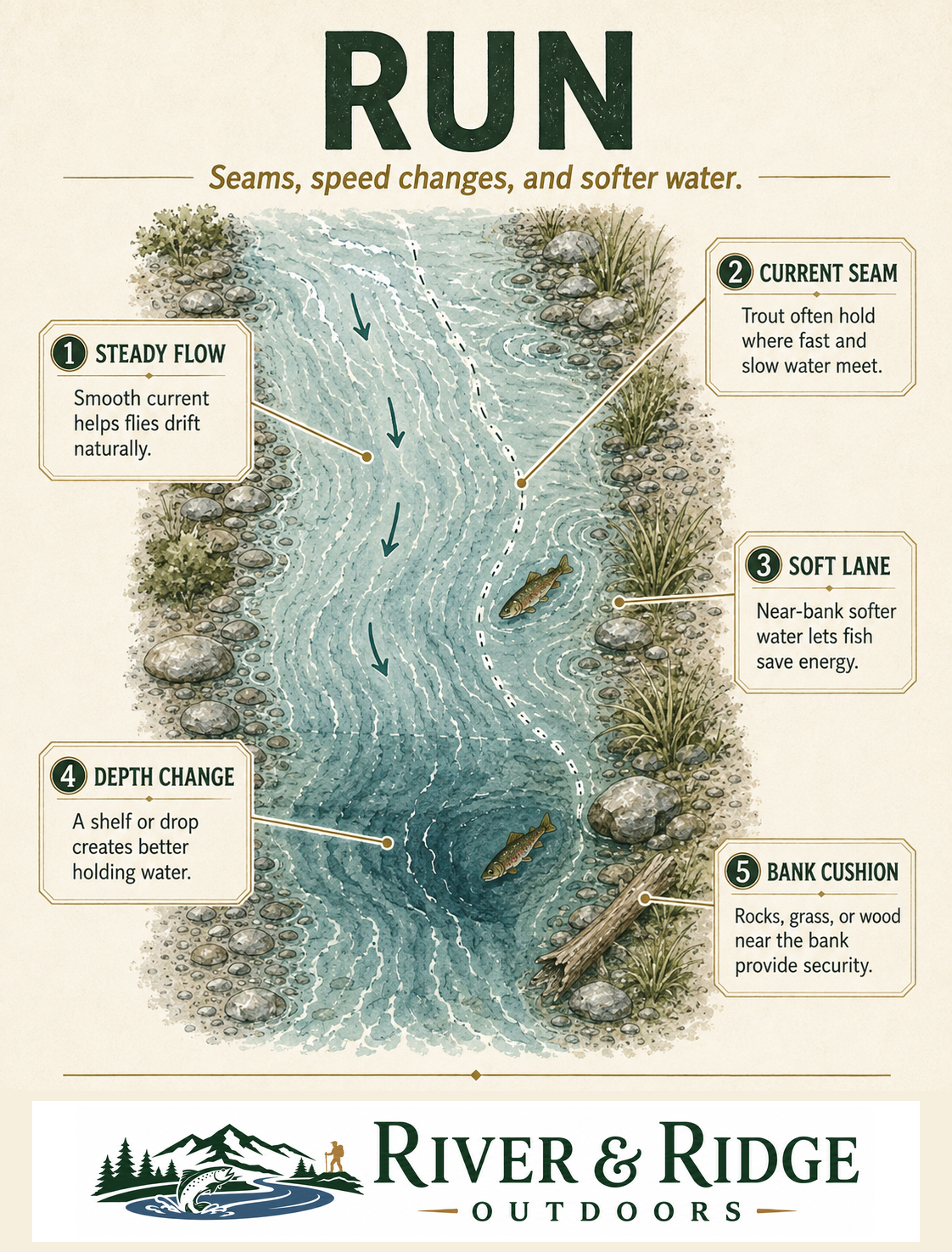
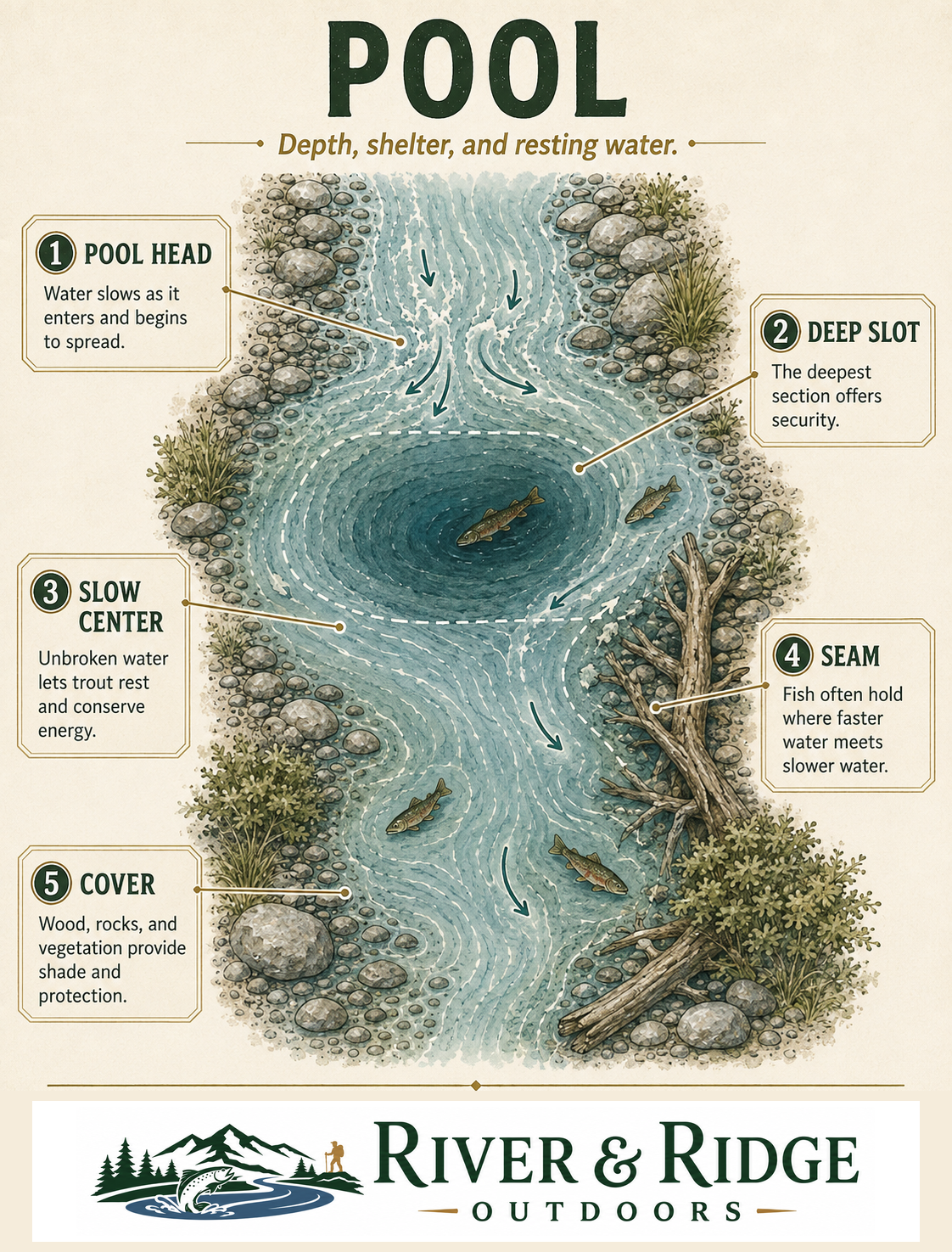
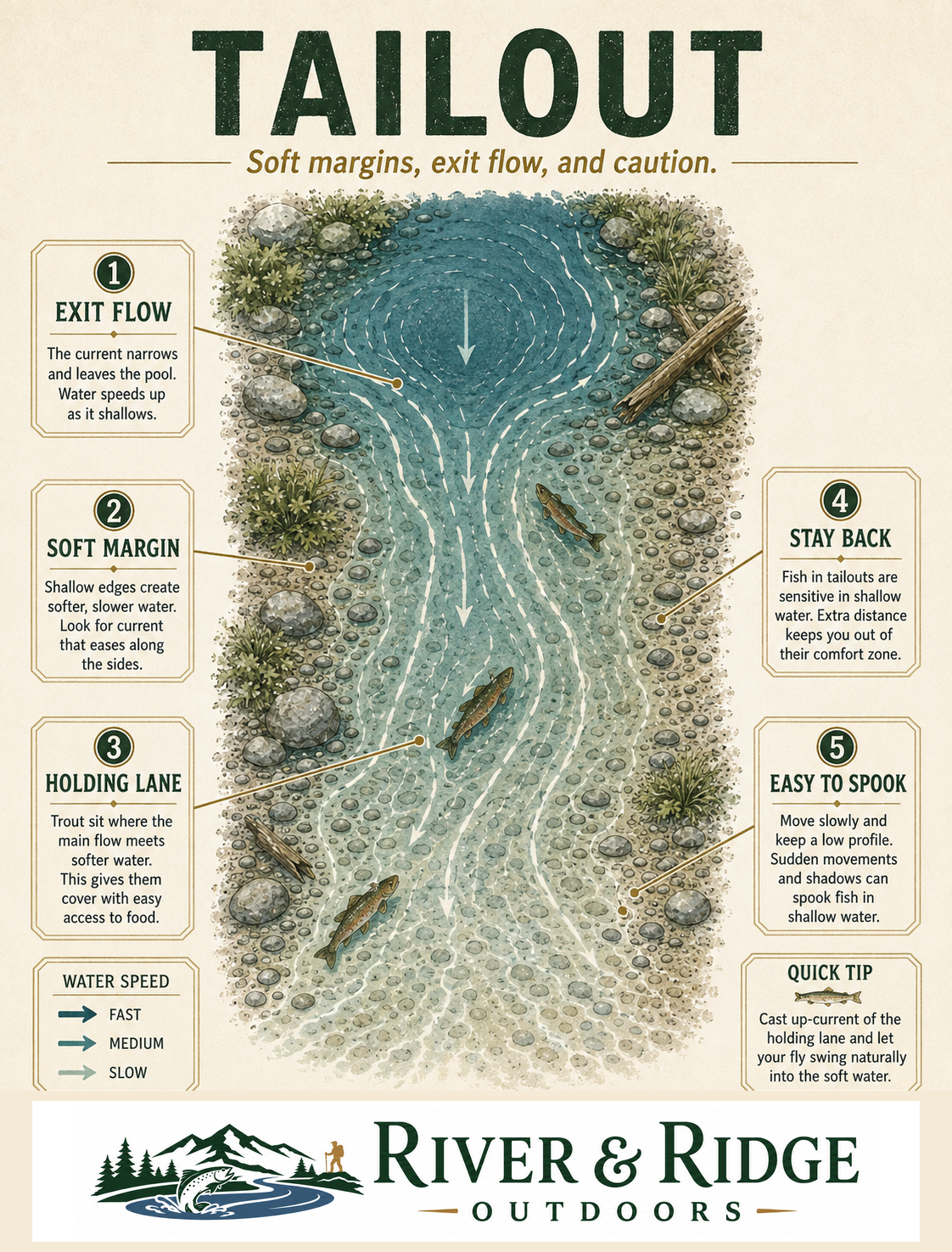
Field photos: River & Ridge Outdoors · Illustrated guides: RRO Training Illustration Library
Regional coverage
Use these descriptions to picture the river, its current, casting room, and common holding water. Open the regional map for individual rivers.
| Water family | Box fit | What the fishing is like |
|---|---|---|
| Upper & middle Manistee | Core water | A broad, groundwater-fed trout river with long riffles, gliding runs, deep bends, sand, gravel, and abundant woody cover. Upper reaches often reward careful wading and long, controlled drifts. |
| Pere Marquette resident reaches | Core water | A cold, spring-fed river that alternates gravel riffles, deeper runs, undercut banks, and wooded bends. Resident reaches offer classic dry-fly, emerger, nymph, and streamer water. |
| Jordan, Boardman, Betsie & Platte | Strong fit | Clear northern rivers ranging from tight, quick pocket water to broader riffles and pools. Expect mixed casting room, visible seams, woody cover, and fishing that rewards accurate short-to-medium drifts. |
| Upper White & Little Manistee | Upper coldwater fit | Smaller wooded trout water with cool upper reaches, intimate casting, log cover, undercut banks, and short productive runs. Quiet approaches and compact presentations fit this group. |
Regional fit: This box is strongest across the cold resident-trout reaches above. The deeper river intelligence provides access, regulations, current conditions, and day-specific planning.
Regional river map
Choose your river from the selection box or tap a numbered marker. You will see how the water fishes, how the box fits, typical wading, current temperature and weather, and where to begin.
Choose your river above to open its planning intelligence.
Map markers provide river-system orientation. Measured water leads the decision. The highlighted seasonal window provides historical context, and the local 24-hour forecast shows the likely warming or cooling direction. Active readings show their station and observation time. Current DNR regulations, verified public access, measured conditions, and posted information guide the trip.
Regional map ready.
Seasonal weighting
The season points toward the most likely insects and presentations. Current water temperature, weather, and what you see on the river choose the starting point.
| Window | What to watch and where the box has support |
|---|---|
| Early season | Dark mayfly adults and emergers, black caddis, smaller general nymphs. Expect timing to vary from west-central to northwest waters. |
| Late spring–summer | Sulphurs, tan caddis, Brown Drake, Hex, Isonychia, film stages, and larger nymph roles where local evidence supports them. |
| Summer low light | Terrestrials and caddis; major drake/Hex fishing is concentrated by water, date, and the low-light window. |
| Fall & cold water | Small mayfly/film roles, Isonychia where present, nymphs, and streamers. Confirm open reach and seasonal possession rules. |
Current-condition and legal checks
Start with the current regulation for your reach. Then use water temperature, flow, weather, and local observations to choose access, care for trout, and adjust your presentation.
Matched physical system
The physical box gives you the flies and the field order. This page shows how to apply that system to this region, season, and river.
Improve this region
Tell us the river, reach, or question that would make your next trip easier to plan.
Give Feedback